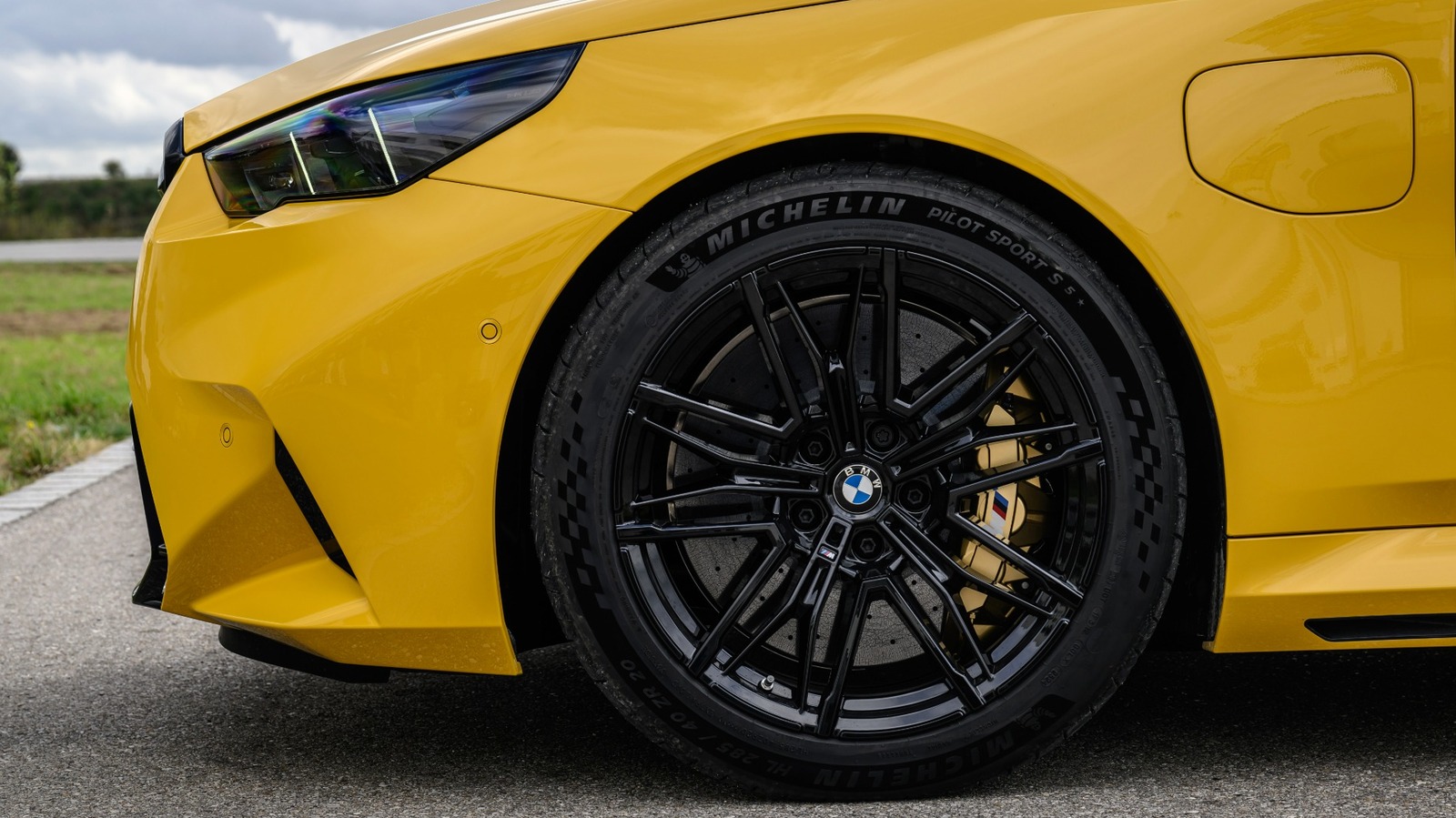
Carbon-carbon and carbon-ceramic brake rotors are often grouped together as exotic alternatives to cast iron, yet they are not interchangeable technologies. Their shared association with high-performance vehicles can obscure a central distinction: carbon-carbon systems are closely tied to sustained extreme-temperature use, while carbon-ceramic discs have been adapted more broadly for road-going performance applications.
Carbon-carbon rotors use carbon-based composite material throughout the braking disc. They are widely associated with motorsport and aerospace environments, where brakes are repeatedly brought to very high temperatures. Their performance characteristics make them less suited to ordinary road use, where braking systems spend much of their time cold or operating across highly variable conditions.
Carbon-ceramic discs also begin with carbon-fibre composite material, but their structure is transformed through a process involving ceramic material. The resulting rotor is designed to offer the heat resistance and lower weight associated with advanced brake hardware while being more practical for high-performance road cars. As Jalopnik's comparison of the two technologies explains, the material and production differences shape how each system responds to heat, wear and daily driving.
Cast iron remains the market standard
Conventional cast-iron discs remain the default choice across much of the car market because they are proven, widely available and effective over normal road-driving temperatures. They also allow manufacturers, fleets and owners to manage replacement and servicing within familiar supply chains. Advanced carbon-based brakes are generally reserved for vehicles where lower unsprung mass, repeated heavy braking or a premium performance position outweighs their added complexity.
For buyers, the label matters less than the intended use. Carbon-ceramic brakes can be a relevant option on powerful road cars that may see demanding driving or track work. Carbon-carbon systems belong principally to applications built around consistently high thermal loads. Neither material eliminates the need to assess pads, calipers, cooling, tyre grip and the wider brake-system calibration that ultimately determine stopping performance.